Computers in school (updated)
Introduction
A much shorter version of this post was initially published on 2022-05-23 (Pungenday, the 70 day of Discord in the YOLD 3188) in my gemlog at:
gemini://gem.hack.org/log/computers-in-school.gmi
The text has been edited after speaking with some old school mates and trying to remember more. I also added a few photos.
The beginning
When I started upper secondary school as a sixteen year-old in 1988 my school had what I think were IBM PC/XT computers, one classroom of 16(?) computers with colour monitors and another classroom set with monochrome monitors.

The school also had a side-room full of quite beautiful Commodore PET-like things. They might have been CBM 710 or CBM 720, the only PET-compatible series that had a real serial port (foreshadowing here) or, perhaps, real old PETs in a fancy shell, the European-only 8096-D or 8296-D. Computers in this room, AFAIU, were only used for typing practise.
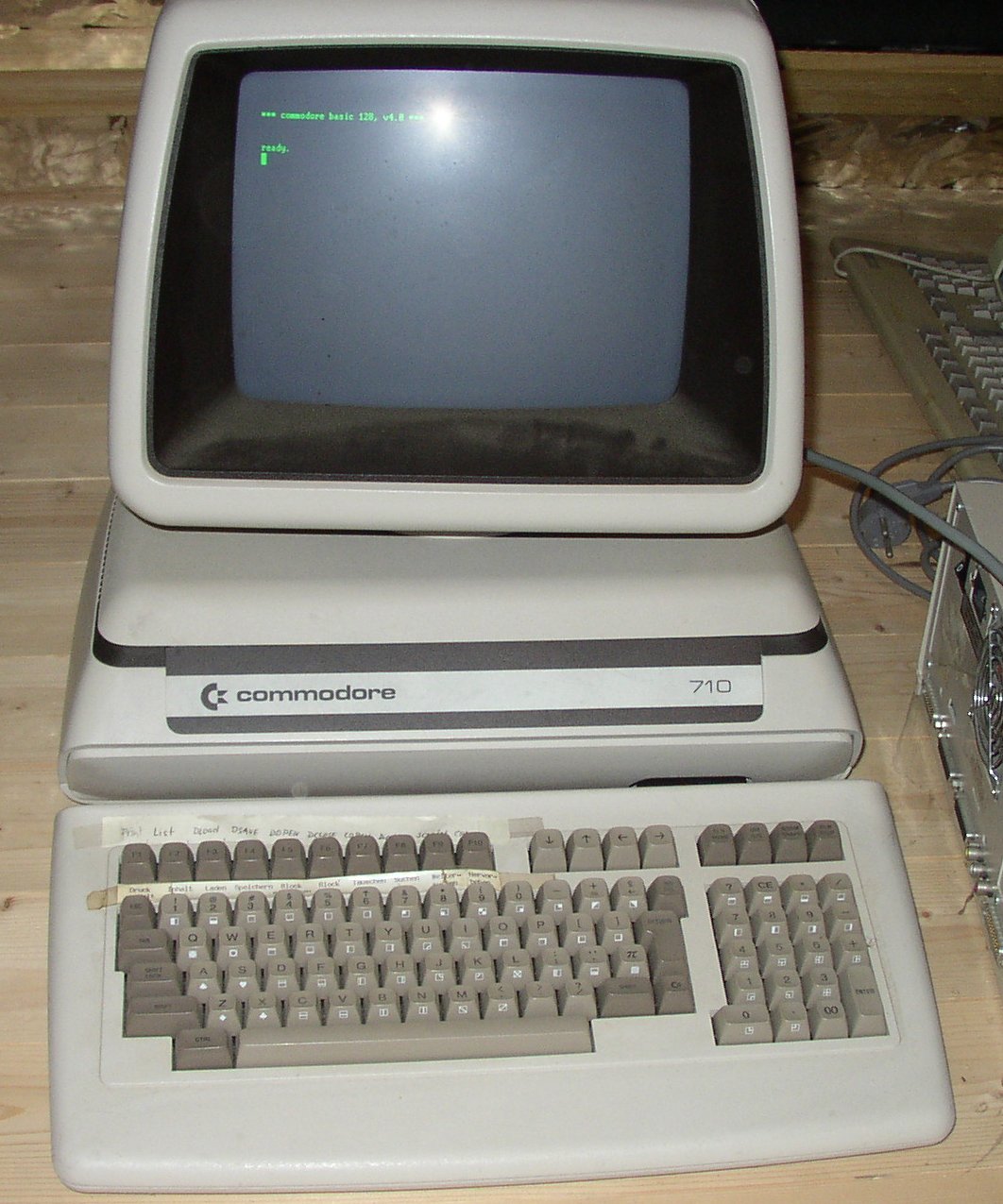
Taken from Wikipedia.

Also, look at the 8096 here: https://www.flickr.com/photos/162268510@N04/albums/72157705034210124
Depending if they really were CBM 7x0s or disguised PETs they had either a MOS 6509 @ 2 MHz (a version of 6502 which could handle some extra memory) or 6502 @ 1 MHz, 128 or 256 kiB RAM (96-160 kiB for the PET), a green monochrome monitor and, thankfully, 80 column text. Fanless! Nice!
The PC/XTs (or if they were clones?) were Intel 8088 based. I don't remember how much memory they had. Max was 640 kiB but I doubt they had that much. Probably 256 kiB. The monochrome classroom had amber monochrome screens and, I think, Hercules graphics. I remember some experiments with the graphics. The colour classroom had at most CGA.
They also had hard drives, probably something like 20 MiB, and a floppy drive. They had a noisy fan.
There was also a small room with a character terminal hooked into an RTTY decoder and a radio. I don't know why this was here and we usually didn't have access to it.
For some inexplicable reason there was also a small room filled with original breadbox Commodore 64! It was almost always empty. No one used them, not even for playing games.
The PCs had Turbo Pascal 3.0 which was a really nice, incredibly fast compiler, even on the slow 8088s. The PETs had some form of BASIC in ROM but I don't know if they had any other development tools.
The PCs were not networked but they had some kind of printer sharing going on. There were two matrix printers attached.
Summer surprise!
I came back to school in August, 1989. Coming back after the summer holidays after my first year I was surprised that the school had decided to buy 16 brand new IBM PS/2 computers! They had totally replaced the colour classroom, probably trading the computers there, somehow. I hope they got a good deal! The monochrome classroom and the 64s were left alone. I don't know what happened to the CBMs.

The PS/2s were probably model 30 286 (ISA bus like the rest of the PC market) or model 50 (with MCA, IBM's proprietary new extension bus). The original Model 30 had just a 8086, so that would have been really stupid to buy. I'm pretty sure we had the Model 50 or at least the Model 30 286, since they had both 286 and VGA.
They had an Intel 80286 @ 10 MHz, 1 MiB RAM, 20 MiB hard drive, 640x480 (VGA) colour screens, 16 colours. Their one saving grace was the wonderful Model M incredibly clicky buckling spring keyboard.
The introduction price of the PS/2 Model 50 was $3,595 in the US. This was probably much more in Sweden, especially since there was also a ~23% sales tax.
The school also chose to connect the PS/2s in a 3Com 3+Share network. Can't remember if it was Ethernet or Token Ring. The 3+Share network had a central fileserver, probably the 3Com 3Server, although it might have been just software on yet another PS/2. I never saw it in person.
The 3+ e-mail solution was not used, only the file server and the printer server services.
I think I heard that all of these things had costed about 1.5 million SEK, which would be about ~3.1 million SEK (~300 k EUR) today.
Furious mischief
I was furious. So much money wasted. I had a *nix box at home, a Luxor ABC 1600, which gave me a wonderful taste of multi-tasking and multi-user stuff, although it was a bit slow. It stupidly only had a 68008 and just 1 MiB RAM, but much worse was the small hard drive, 13 MiB!
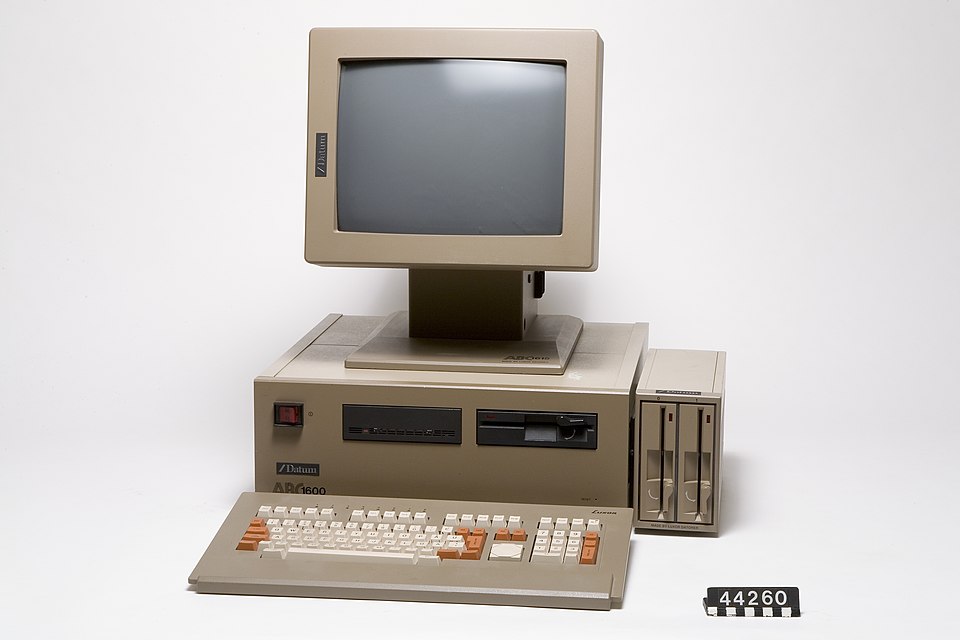
From Wikipedia.

This was also the time I had started dialling into terminal servers of the Swedish university network (SUNET) and experiencing Real Computers.
SUNET in those days was a friendly place. On many computers when you first connected to them it said "Welcome to XXX! If you don't have an account, login as GUEST." or something very similar. SUNET in -88 was mostly DECNET but had recently also gained TCP/IP.
I was mostly on the DECNET side of things, so I experienced VAXen, a few PDP-11, and when I could get access, the wonderful DEC-20 (PDP-10 with TOPS-20).
Another nice thing at the time was that if you called the minicomputer companies and asked for hardware descriptions some of them would actually send you entire hardware manuals, even if you were a spotty teenager with no computer budget. Thank you, DEC!
I got so mad about the whole thing with the PS/2s that I actually wrote a little program just to mess with them… It was a simple thing. I just modified AUTOEXEC.BAT to start my program the first thing it did. The computer would display "WELCOME TO YOUR NIGHTMARE!" in huge letters in garish colours and starting going "weeee, wooo" with the bad speaker. At the same time it would start ejecting page after page on the network printer.
I heard that once during a class the teacher in panic turned off the printer and then turned in triumph towards the class, only to have the other printer start spewing papers instead. Everyone laughed.
I don't know who ratted on me, but one day the guy in charge of the computers (Hi, Tore!) stood waiting on me as I was about to enter a classroom. He asked the teacher if he "could borrow Michael for a bit" and dragged me away to his small office. When we sat down he said:
– I know you're the brain behind these Nightmare Gangsters!
Wow, there's a good name for a band! I denied everything, of course, but he saw through me and started asking technical questions about computers instead. There were no gangsters, of course. It was just me.
Later, Tore had the genius idea to ask me to write a program for the school library. He wanted it to be possible to dial in to the city library computer to search for books. He wanted a simple terminal program that automatically dialled, logged in and let the student do their thing and then automatically disconnect on inactivity. Would I be up for writing something like that? Hell, yes!
I wrote the program and it was in use many years after I had left. The genius of Tore was to steer me towards a more creative path than messing up his network. I didn't understand it at the time, but this was a brilliant move.
Me and some friends did some experiments with the network anyway. The authentication in a 3+Share network was entirely client-side! Changing a single byte in the client made you admin. We created a new read/write file share called FREE and used it for our own shenanigans. Tore must(?) have seen it but didn't delete it!
The one time Tore said anything remotely about the FREE volume was when I was trying out a multi-user adventure I had written and used the network drive as the IPC mechanism. Every copy of the MUD I started absolutely hammered the FREE volume with reads in a busy loop and everytime any of my friends in front of the computers running the MUD did anything (move, pick something up, say something in a room, anything that changed the world) it wrote it to the database which was immediately picked up by the others. It must have sounded terrible in the room where the file server stood, which was also Tore's office.
Tore came running out of his office, scanned the room for the culprit, locked eyes with me and stormed towards me.
– Michael! Are you doing something on the network!?
– Er… Well, I have written this text adventure program… Would you
like to have a look?
– No! No matter.
And he rushed off again. I hurriedly gestured to everyone to kill the MUD programs. He never mentioned it again.
What to do instead?
The main reason for choosing PCs was AutoCAD. I can understand that, but AutoCAD was only used by the students on the Technology programme, AFAIK. I was in the Science programme and we never used it, at least not during class. Most of us would have been fine with just terminals for what we did in the computer classrooms.
But if they just had to buy PCs, why not buy much cheaper PC compatibles? I never got a satisfying answer. "No one has ever been fired for buying IBM"?
So… What would I have done if I had anything to do with it? Some rough requirements:
- Able to do CAD, probably AutoCAD.
- Fileserver.
- At least 16 seats, preferably with fanless equipment.
- At least two networked laser printers.
Server
OK, so we buy 16 PCs of some sort and we need a fileserver. Something much nicer than the 3Com 3Server thing. I would go for a mini, something people could log into and do their stuff if they wanted to, and not just a fileserver.
DEC VAX with Ultrix or VMS
DEC at the time had a product called Pathworks (earlier known as PCSA which it was still called under VMS). Pathworks allowed you to use a VAX as a file and printer server for a bunch of MS-DOS PCs. Pathworks was both some MS-DOS software and VMS or Ultrix software on the server side.
The client software actually made the PC a full member of a DECnet, so it was quite something. With no other software it would mean connections to any other VAX added later would have been dead easy.
I'm biased towards Ultrix, of course, but VMS would have also been acceptable. Even better would have been a BSD, of course, and BSD was actually available even for upper secondary schools/highschools, not just universities. However, considering that we would like to use something to net boot our PCs and act as a fileserver it's likely DEC's own offering was the way to go.
What hardware? One of the MicroVAX II followers, like the MicroVAX 3500, perhaps?
The 3500 was introduced at for a whopping 74,800 USD in 1987 with 16 MiB RAM, the 3600 with 32 MiB 99,980 USD. Hopefully they were all a bit lower in 1989! There were also considerable educational discounts, so perhaps the real price would have been much lower.
Also, I found notes that the really powerful VAX 6000 was >140 kUSD with 32 MiB RAM and a tape drive in 1990. That would have been marvellous, although expensive!
I guess even a 3300 (~25 kUSD), expected to peak at 5 simultaneous users, would have been nice, if most of the users kept to using the CPU of their PCs.
As much memory and disk as the budget would allow. A tape drive for backups. Could we afford a 1.2 GiB drive? Two RA81 (456 MiB each)? Buy more drives later?
Diab DS90 with D-NIX
Another solution would be to go local and use Diab Data's *nix machines. 68k-based, multi-processor machines. They had their own flavour of Unix called D-NIX, later DNIX. It was roughly System V-compatible, but using their own realtime kernel which also had the concept of "handlers" for things like user level filesystems and network stacks.
I had a Diab DS90-20 at home for a while and managed several DS90-3x (several 68030) and a DS90-47 (8 * 68040, lots of memory, one my favourite machines) at work. This was at Bull, the company that bought Diab, and well after the Diab DS90s stopped being sold.
A very funny thing about the DS90s is that the Ethernet card, at least the KOM-KIT II I have some experience with, had a 68020 of its own and several megabytes of memory! The telnet daemon actually lived on the NIC! It DMAd stuff when it needed to, and let the main CPU do other stuff.
Not at all sure about PC integration, though. Was there something even close to DEC's Pathworks? Most of Diab's own communication from the 80s was mostly about integrating with Luxor ABC 80xs and ABC 1600, not PCs with MS-DOS. Ducking around I find some mentions about PC integration, but have yet to find even a product name. Anyone?
Perhaps FTP Software's PC/TCP would have worked? Did they already have NFS support in -89?
Rough prices:
- DS90-30/600S (one or two 68030 + 68881 fp, 600 MiB hard drive, not sure if tape drive is included, "S" might mean it is): 306 kSEK
- -31 (Up to four 68030) 370 kSEK.
- Expansion to 16 MiB RAM: 103 kSEK.
- Built-in tape drive: 32 kSEK.
- NIC: Unknown.
- Total: > 500 kSEK.
Others
I know some other secondary schools had Norsk Data minis. Don't know much about them. Prime might have been interesting, too, but again I don't know much.
An interesting idea is, of course, to use one of the commercial Unices for 386 and keep a very beefed up 386 as the file server. That needs further investigation.
PCs
- 16 diskless 286-class PCs with the Pathworks boot ROM (or similar for Diab?) on the network card.
- Refurbished: The old PC/XT boxen with ripped out hard disks and network cards with boot ROM. Not sure if this would be worth it but, hey, this would be another 16 seats for free. Might be useful even if they probably wouldn't be able to do CAD. On the other hand… The fan! Aaaah! Perhaps better replaced by terminals?
- Ethernet NICs for all boxes.
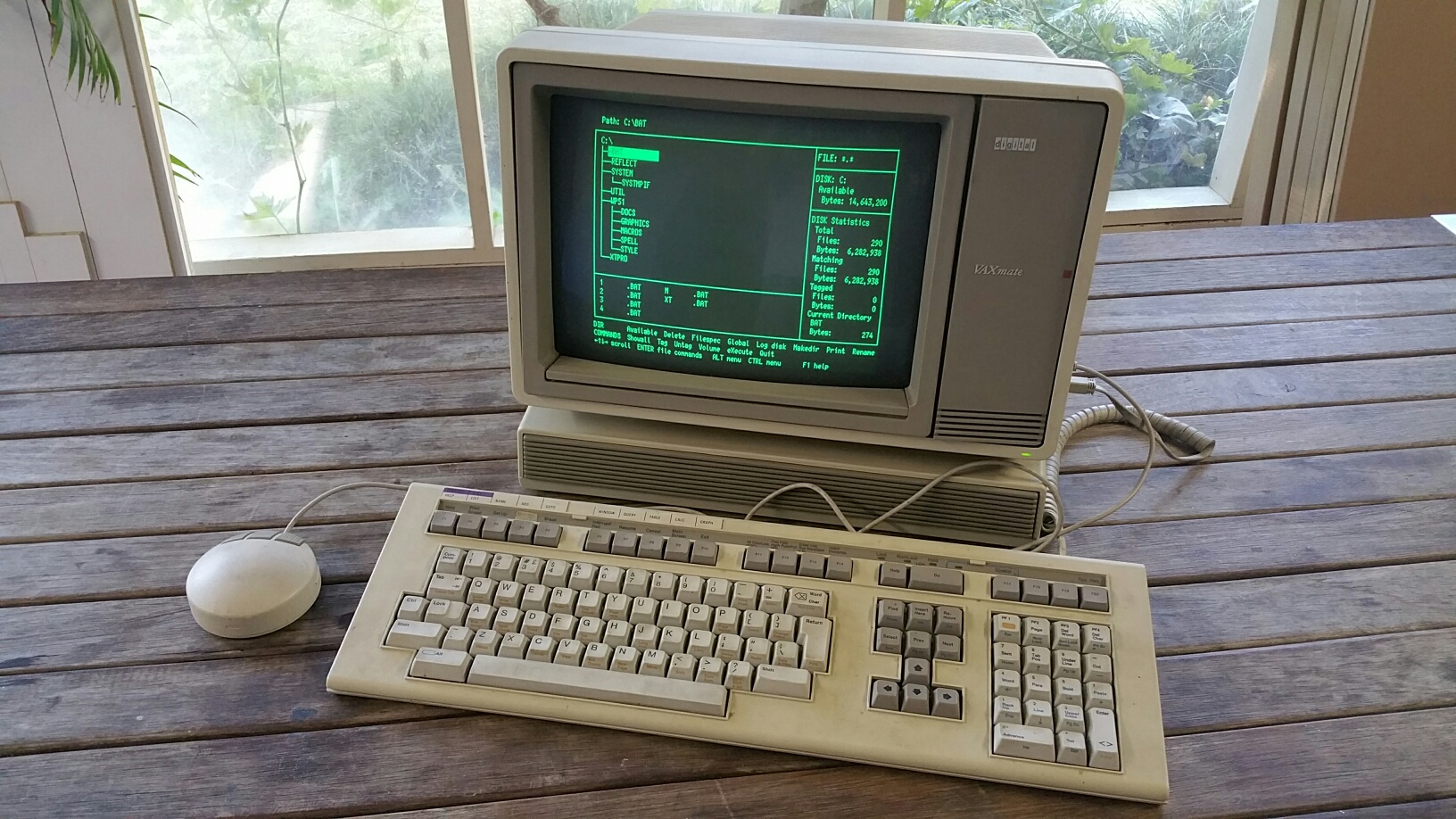
DEC themselves introduced a 286-based diskless and fanless VAXmate in 1985 and later followed up with DECstation 200 and 300 (with fan). There were other diskless and sometimes even fanless options from other companies, including the 3Com 3Station 2/E for use with the 3Share we actually had at my school.
I would have been happy with whatever PC compatible that wasn't IBM, actually, but fanless would have been nice. I had a Commodore PC-20 at home with a 286 and that would probably have sufficed.
There were some quite good terminal programs available for MS-DOS, including Reflection which could both work over LAT and emulate graphics terminals like DEC VT340 and the older Tektronix 4014. Kermit could emulate VT320 and could translate between character sets. Might be preferable compared to the Pathworks terminal, perhaps?
Terminals
Like I said, only the students on the Technology programme actually had any requirements for PCs with their use of AutoCAD. All the other students' needs at the time could by served by using just terminals.
In time, I suppose, only character terminals wouldn't suffice anymore, but during my entire time at the school they would have worked just fine for what we were doing. Over time, say 5 years, they might also be replaced with PCs.
- At least 16 terminals, probably replacing the PC/XTs, since there was an entire classroom available. Perhaps more (dedicated for staff?) in the C64 room?
- Terminal server(s). With only 16 (32?) seats we would like more people to be able to work on the server, probably with terminals over LAT or telnet instead of serial cables, especially if far away from the server.
DEC's own VT320 terminals were quite cheap, actually! Lowered to 495 USD soon after introduction in 1987, but maybe 100 USD more for an international version.
VT320 terminals had support for the Latin-1 (ISO 8859-1) character set. Kind of important for Swedes to be able to use Swedish even if many systems still used SWASCII (ISO-646-SE), replacing {}|][\ with national characters, but Latin-1 would have been nice.
I don't know if the Pathworks terminal client supported Latin-1. We would probably have some kind of converter program to convert between PC/Latin-1 (and PETSCII?) available anyway.
Cheap terminals might also mean we could have a special terminal room for employees. I don't think it would be possible to give every employee a terminal, unfortunately.
Silent terminals would have been preferable compared to re-use the noisy PC/XTs for extra seats but could obviously not run CAD nor any other local software.
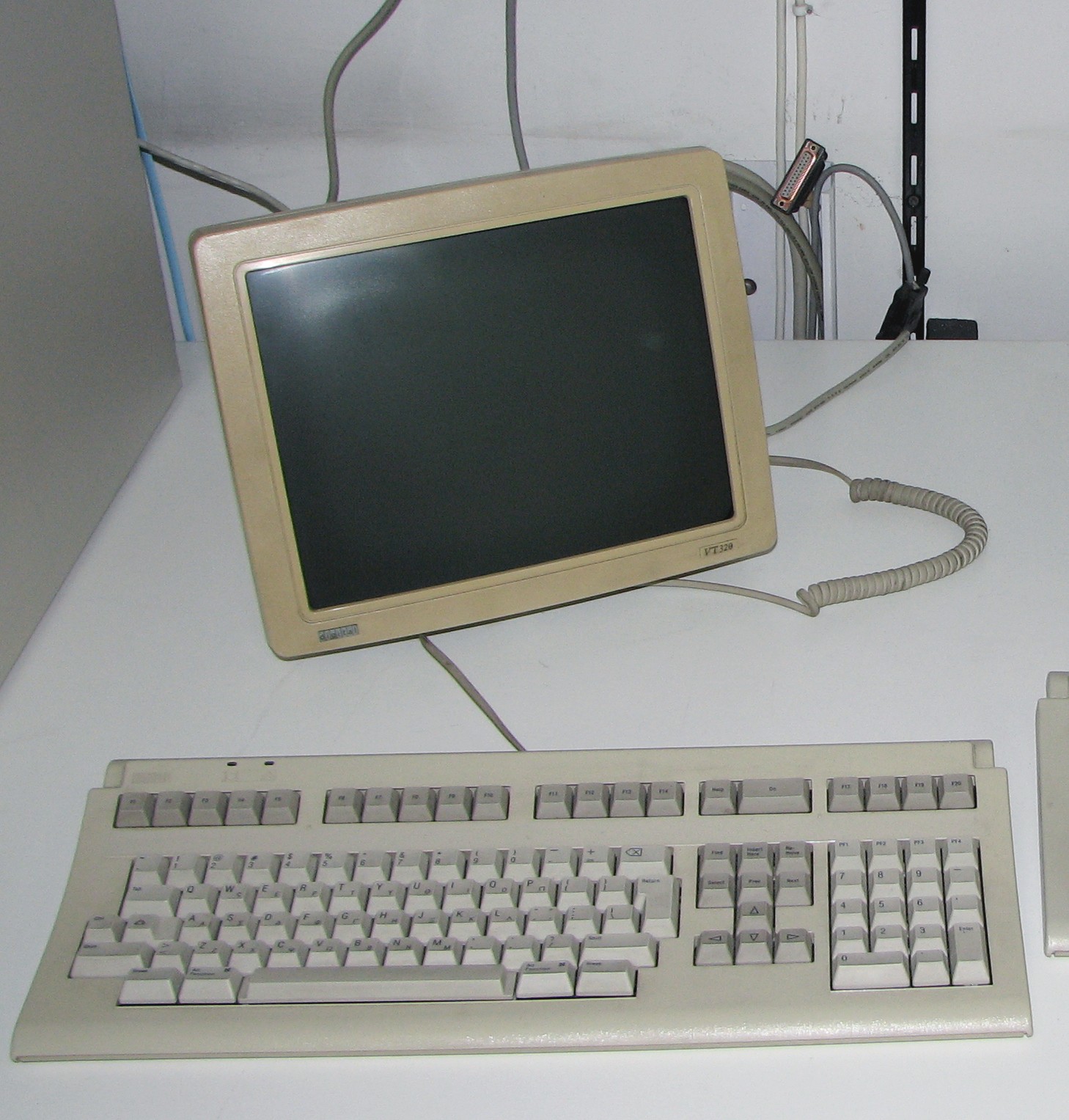
Perhaps with the LK421 "Unix" keyboard?
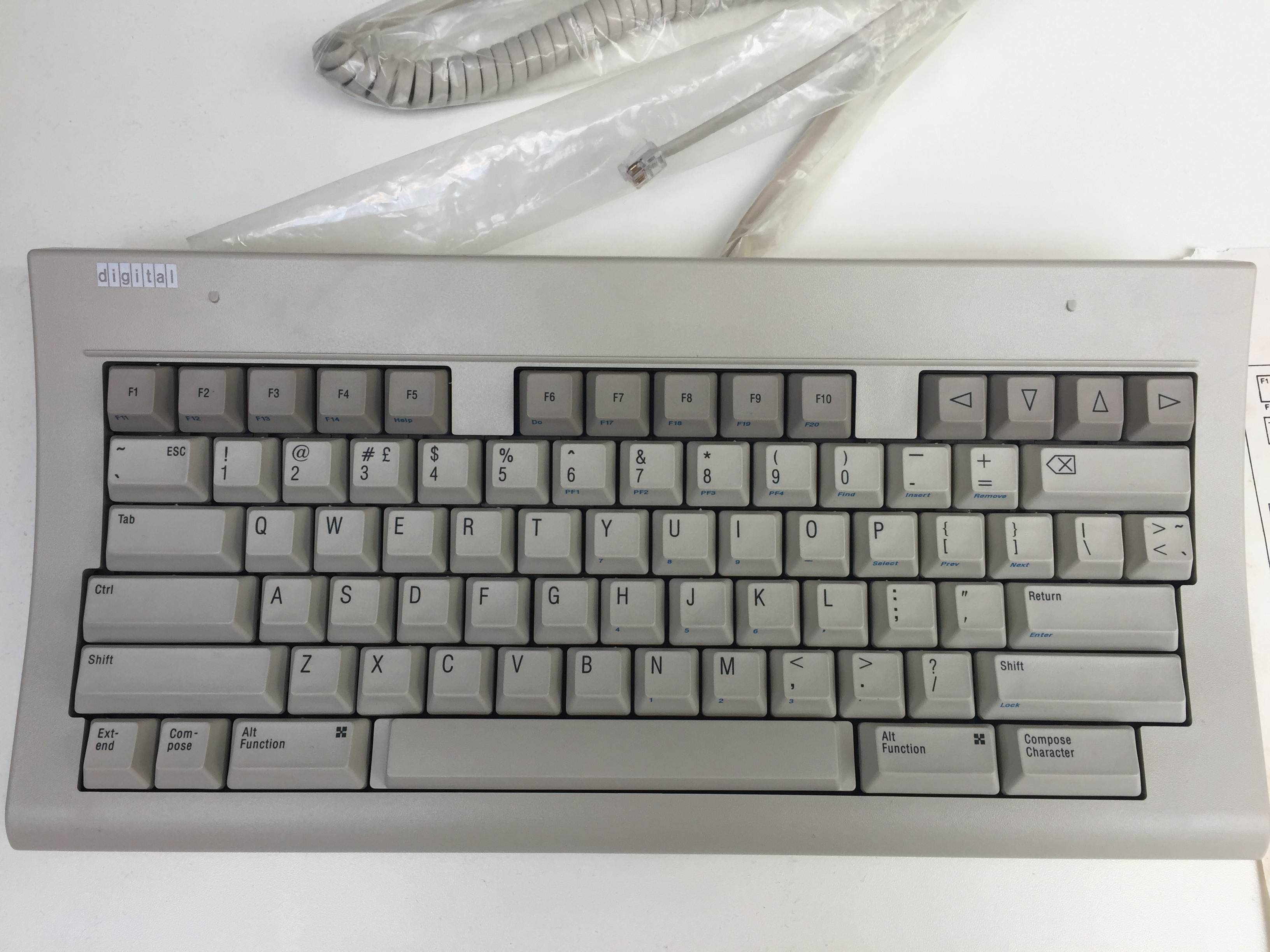
Taken from https://deskthority.net/viewtopic.php?t=17981
Both keyboards were rubber domes, sadly, but rather firm.
Local terminal manufacturer Facit had some nice products, too, which might have been preferable. Chief among them were the slightly strange Facit Twist (aka Facit 4440) which could show 72 rows at once in one screen position. You could turn the screen 90 degrees for 72 rows or huge characters in 24 row mode.
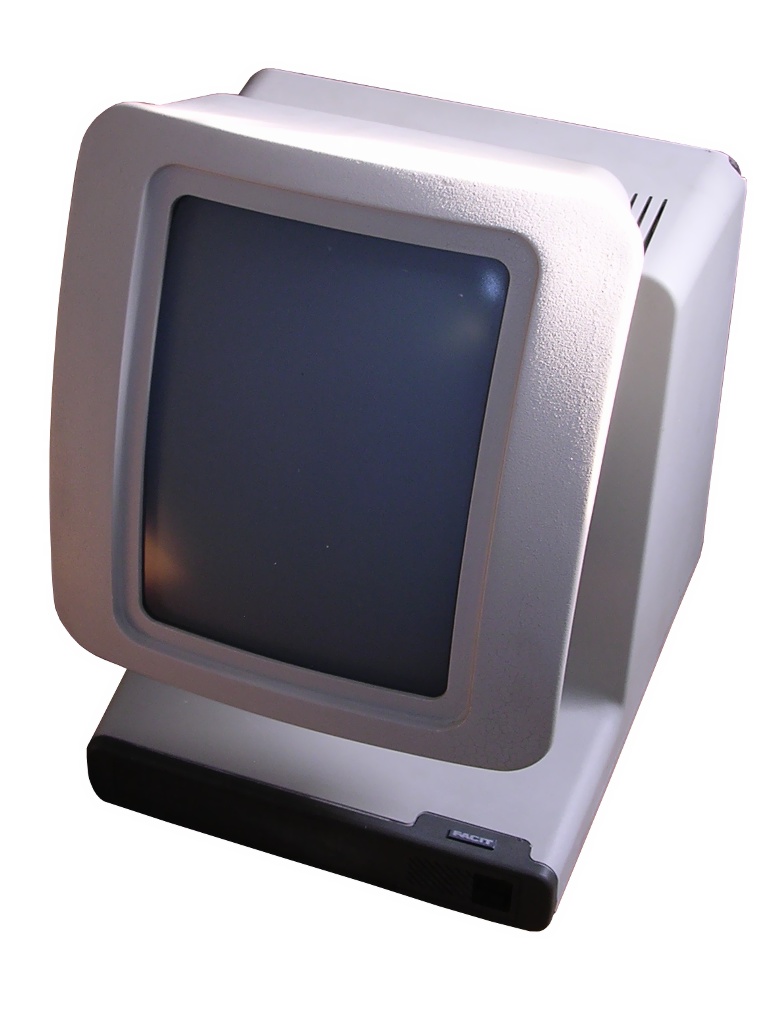
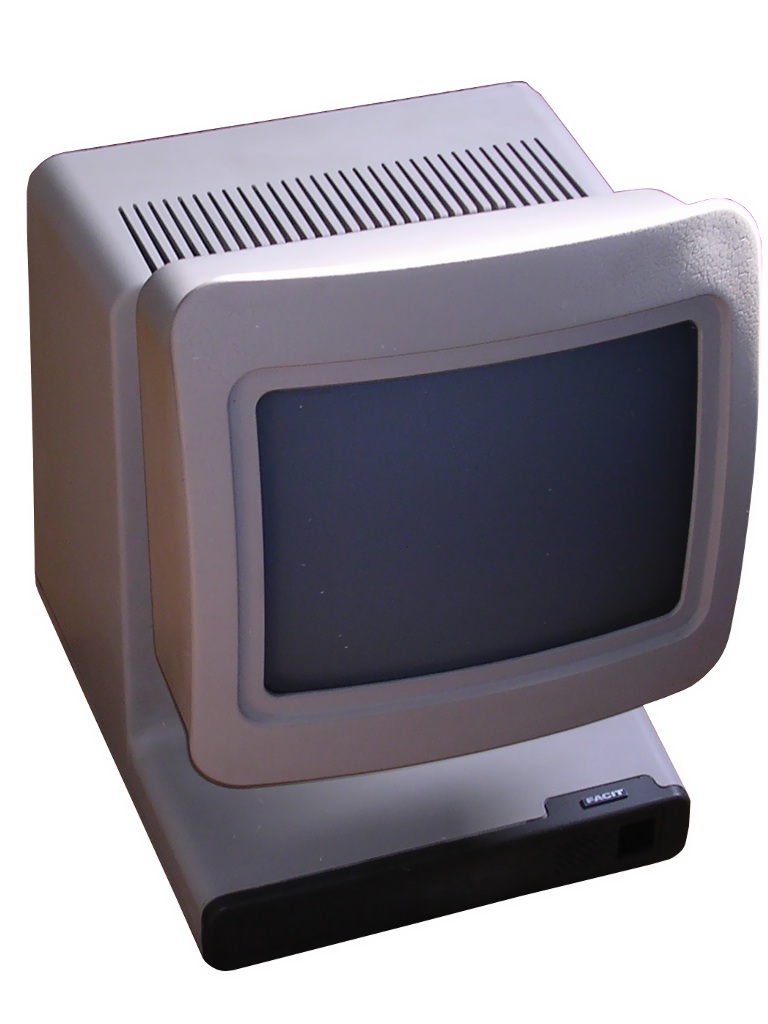
Both images by MCbx, CC BY-NC-SA.
The only Twists I've used had black and white screens but there were amber screens, too. I'm told they were much nicer to read on.
The keyboard was very low-profile. The keys switch perhaps even scissor switch?
They also were just VT102 compatible and didn't have Latin-1, but usually had SWASCII support. If you were lucky you got both ASCII and SWASCII in G0 and G1 and could switch among them. I had some Emacs Lisp to do that when showing Latin-1 coded files…
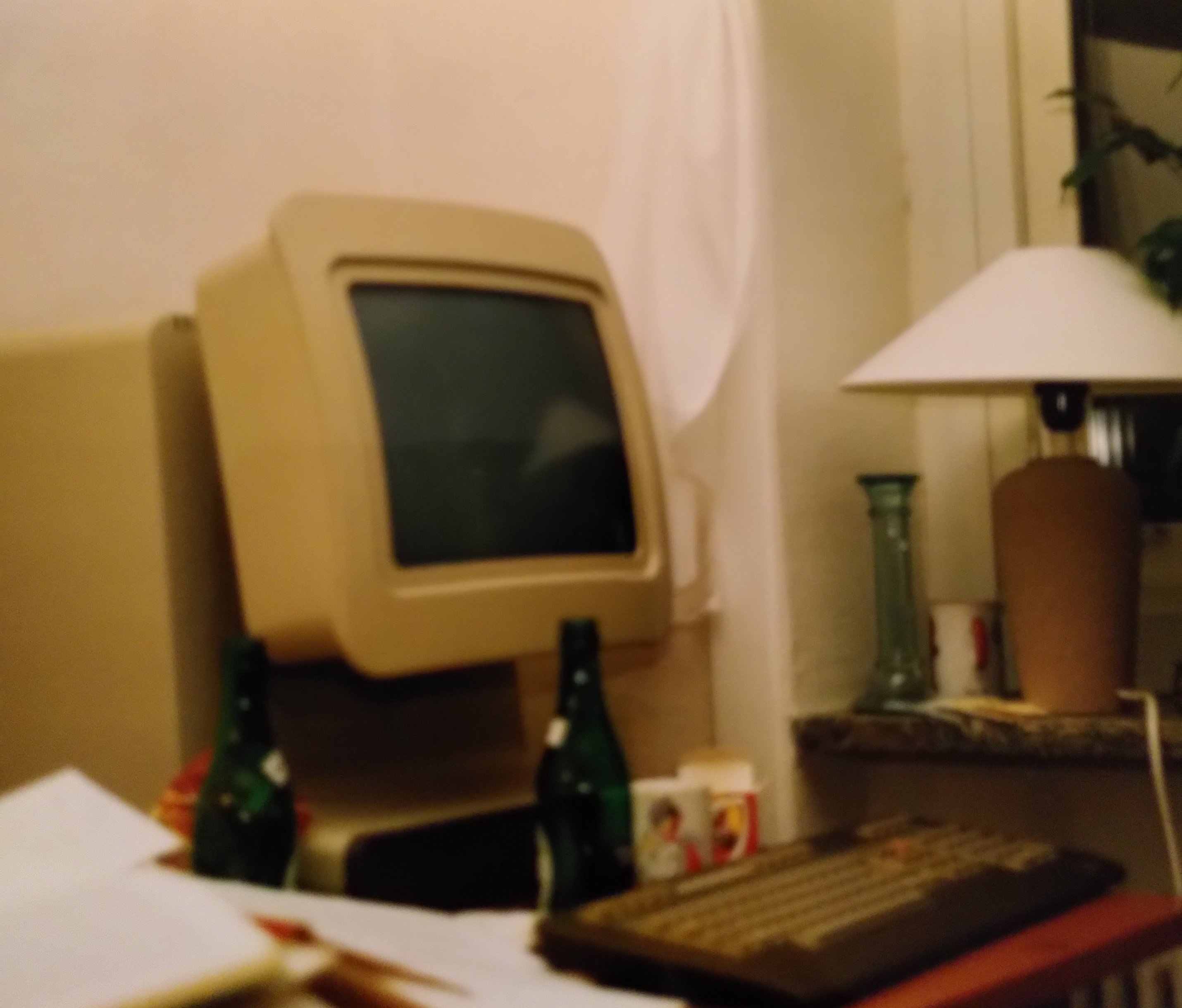
It won the iF Design Award in 1984! Probably introduced in -84? It was certainly for sale as late as 1987.
Bitsaver's copy of the Facit Twist Technical Description with some images.
A Facit Twist would have been double the price of a VT320, though. Price in 1986 was 15 kSEK. Probably less in 1988/89. At any rate they would have been much nicer than the VT320, I think.
On the other hand, perhaps we could re-use the PETs? They had vanilla serial ports, after all, if it was really the CBM 7x0, otherwise we would have had to do something with the extension port. I don't know if this would be a good idea and what terminal programs existed. Worst case we would have had to write our own. That would probably have worked.
On the extreme side, the programmable AT&T 630 MTG terminals (successor of the Bell Labs Blit and the AT&T 5620) introduced in 1987 would have been absolutely marvellous:
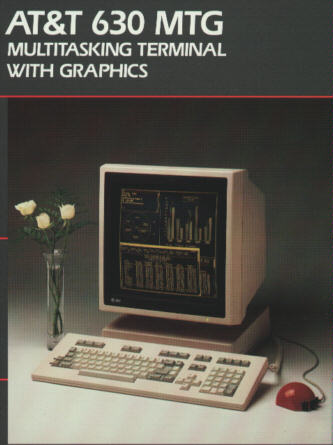
You could download programs over the serial cable on them and run locally on their 68 k CPU. You could also use up to seven ordinary terminal windows. They also sold for much less than the PS/2s above, at about 2500 USD. I don't think any commercial CAD was available but, damn, that would have been nice to use.
Of course, you're going to say, X terminals would have been a nice option. Yes, agreed, but compared to a Blit-like thing like the 630 an X terminal like the very similar NCD 16 (1988) would a lot of the effort on the server. I don't think it would have worked.
A fun idea would have been to experiment with the very cheap Atari ST Mega.

The Mega ST was probably about the same price as a Facit Twist terminal, at least as the price was in 1986. Programs like UW made it possible to use it as a graphical windowed terminal, with some multiplex help on the *nix side. Even MGR was ported to MiNT! But MiNT was first launched in 1993, of course.
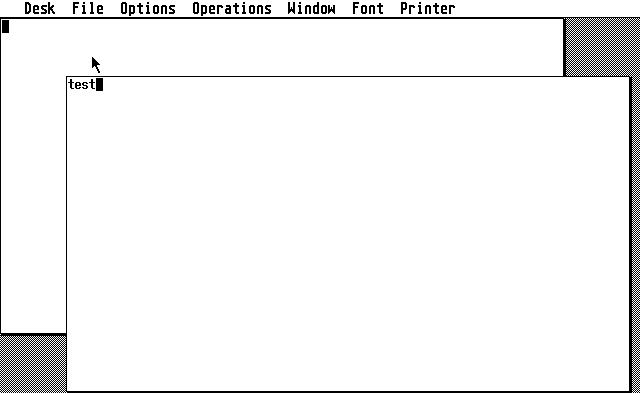
It would have been very fun to extend UW to do other things and even nicer if one could have done some experiments in writing something that could download and start new programs on the ST side or even experiment with some tiny operating system bringup! But… OK… Let's be realistic.
Communications
- Modems: Perhaps we could afford a few (3-5) and a single number for them for remote access.
- UUCP? A nearby university could perhaps offer dial-up UUCP access, probably for free, which would have meant… Internet e-mail! In 1989! This would have been huge.
- BBS? A KOM? I'm certain the local students would have developed a BBS rather quickly. Perhaps integrating it with the above.
Software
- AutoCAD for technical drawings, obviously.
- Development tools, like a C compiler et cetera, and change the curriculum from Pascal to C, probably.
- Probably just text editors for writing + ditroff (pic! eqn!) for typesetting. Perhaps create our own macro set? Quite a step up, typographically speaking, from what we really had.
- Local text editor on the PC? With the home directory network mounted, perhaps editing locally spares the CPU of the server quite a lot. Epsilon was a quite reasonable Emacs clone on MS-DOS, for instance.
- Develop some kind of preview program for troff usable on the PCs! If you're sitting at one of the VGA PC's you coud preview your document graphically before printing, with all the pic illustrations and eqn equations, too. Someone on a terminal would have to keep to using nroff, I guess.
- elm or something like that as a friendly mail client, at least for local mail? Or just use the BBS, which I'm sure would have been there very soon.
As far as I know the only class which had actual programming in the classrooms where from the Science programme. There might have been something for Technology, too, and possibly the el-tele people but they were, as I said earlier, in another building.
A lot more students did programming, though, but not necessarily as part of class.
During my entire time at the school Turbo Pascal 3 wasn't updated, even though I had Turbo Pascal 4 at home on one of my computers and TP 5 was announced while I was still there. Shifting to C under Unix wouldn't have changed much in the programming classes.
Conclusions
The disk space on the server is a problem. We had ~1500 students at the school. Not all of them even had access to the computer classrooms, though.
The students in the shop classes didn't use computers at all, as far as I know, except one of the electrician programmes (El-teleteknisk linje), especially the one specialising in electronics, but they had their own computer classroom far away from us, for some reason.
The students that did have access, perhaps 300, were expected to keep their work on diskettes. If I had the money I would definitely use it on more disk space and increase the quota for users.
Being able to dial in to the server would be a huge difference. Allowing e-mail or setting up a BBS would have been fantastic, even if it was just local. Access to Internet e-mail would have been… EXTREMELY AWESOME!!11
All in all, all of these suggestions would have been a much better system than the one we had for real.
Written by MC on Boomtime, the 44 day of Discord in the YOLD 3191 ().